

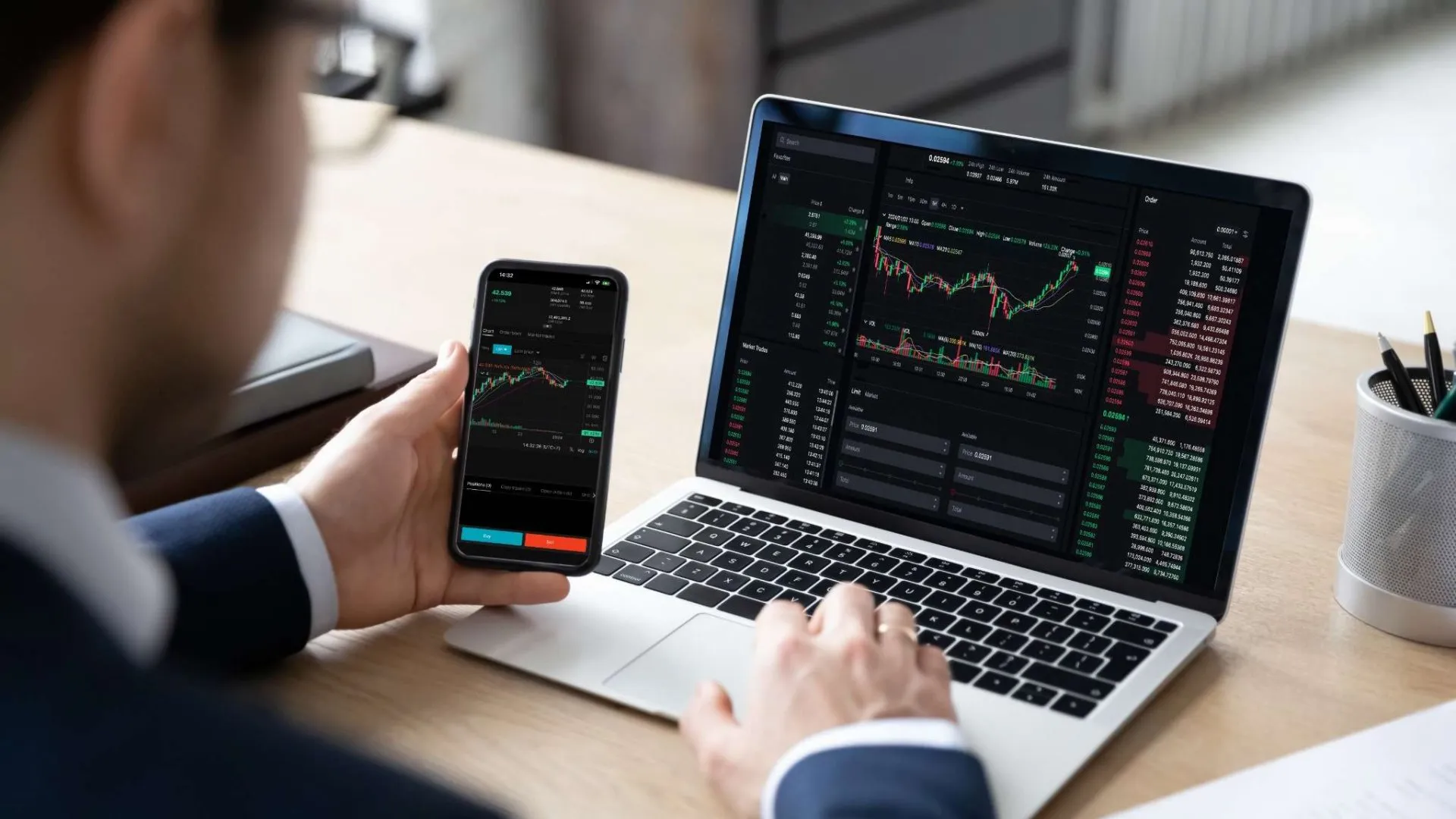
Prop firm challenges are currently one of the most widely spread strategies for obtaining a huge sum of trading capital without investing considerable funds of their own. Traders always dreamed of opening a funded account, but to pass a challenge at a prop firm, traders need to have skills and know how to manage risks correctly. One such tool that helps traders achieve success could be leveraging.
The understanding of leverage meaning in trading and its proper utilization can make trading easier and help traders meet their income goals faster. Still, it should be approached with caution as leverage increases the losses when traders are too careless about managing their accounts.
In this article, we will discuss what is leverage in trading, why it is essential for traders who pass prop firm challenges, and how to use leverage in trading responsibly.
What Is Leverage in Trading?
Before learning how leveraging enables traders to overcome difficulties at prop firms, it is necessary to know what is leverage in trading.
It is a service provided by brokers and prop firms, which enables traders to manage larger trade positions with relatively less capital. Simply put, leverage is an opportunity for traders to borrow money to increase their purchasing power.
For instance,
With 1:10 leverage, a trader can manage $10,000 with just $1,000.
With 1:100 leverage, a trader can manage $100,000 with just $1,000.
Thus, traders are able to make big trade deals with relatively lesser capital.
Leverage is extensively used in forex trading, as currency trades happen with minute differences between prices.
Reasons Why Prop Firm Trading Challenges Make Use of Leverage
Prop firms give traders leverage to ensure that they have adequate room to achieve profit goals. A trader with little leverage would find it hard to make substantial gains within the trading challenge period.
Examples of leverage offered by most prop firms include:
- 1:30
- 1:50
- 1:100
It becomes possible for traders to place positions aligned with their trading strategies without worrying about meeting excessive margin levels.
It is easy for traders who have a funded account to increase profits under proper risk management.
How Leverage Enables the Attainment of Profit Goals Faster
Another crucial factor making leverage vital in prop firm problems is the capacity of leverage to help traders attain profit goals faster.
Most prop firms demand that traders attain certain profit percentages like:
- 8% profit goal
- 10% profit goal
- 5% consistency objective
In the absence of leverage, a trader might be required to incur large price changes to meet those profit goals.
However, with the use of leverage, a trader will realize higher gains even when small price changes occur.
Consider the following example:
A trader without leverage would make only $10 profit from small price changes.
On the other hand, a trader with leverage can make $100 from the same price changes.
Capital Efficiency
One other benefit of using leverage is the increase in capital efficiency.
When trading on prop firms, one needs to carefully calculate his drawdown limits while taking advantage of the many trading opportunities. Leveraging enables a trader to trade on a very small amount of margin while leaving the rest unused and open for further trading purposes or risk management.
For example:
- When using a $100,000 challenge account, the trader only uses a small portion as margin to initiate trades.
- The rest of the balance is left untouched for future use.
- This is important since leveraged trading is very crucial to successful trading.
Leverage and Scalping Trading Strategies
A great number of prop firm traders rely on scalping trading strategy where they try to make little gains through their trades. Scalpers target little gains in the market, and therefore leveraging would be vital.
If leverage is not used, these little gains would hardly contribute much to the challenge targets. With leverage, however, little market gains would translate into significant profits.
Some advantages of leveraging for scalpers include:
- Speedy trades
- Increasing position size
- Profit opportunities
- Capital efficiency
Leverage Helps Traders Handle Risks Efficiently
Newbies usually consider leverage to be a guarantee of increased risks. The truth is, leverage alone isn’t risky at all; it’s just poor risk management.
Skilled traders use leverage wisely, ensuring that they apply stringent stop loss limits.
As an illustration:
- A trader places no more than 1% risk for each trade.
- Leverage amplifies their position.
- Stop losses protect their investments from falling too low.
- This enables traders to utilize leverage effectively without breaking any prop firm drawdown limits.
- In essence, when considering what is leverage in trading, one should remember that leverage should complement strategies.
Leverage in Foreign Exchange Trading
Foreign exchange trading happens to be the most leveraged market in the world. Currencies normally change by very small amounts on a daily basis, hence making leverage necessary.
Advantages of Leverage in Prop Firm Trading
Greater Market Exposure
Traders have the capability to engage in bigger deals without investing much money.
Better Trading Options
Traders can trade on different foreign currencies.
Faster Increase of Capital
Good traders benefit greatly from leveraging because they are able to multiply their profits.
These above factors prove very useful during prop firm trading evaluation when certain goals have to be achieved within a particular period of time.
Errors That Traders Do In Trading Leverage
Leverage, as an effective tool for traders to overcome difficulties, can also destroy trader accounts easily in case of misapplication.
Overtrading
There is the issue of some traders opening too many positions due to their leverage power to buy more.
Neglecting Stop Losses
Unprotected trading is one of the errors that cause traders huge losses.
Emotional Trading
It might be the case that large positions in leverage may put traders under pressure.
Pursuit Of Loss
A very risky practice that traders do in trading leverage is trying to chase losses by opening larger positions.
Many traders lose out in prop firm challenges because of misusing leverage.
Best Strategies for Leveraging Your Funded Account
After getting your funded account, it will be even more crucial for you to manage leverage properly. Here are some good strategies that you may want to consider:
Employ Low Risks Per Trade
Successful traders usually bet only 0.5% to 2% per trade.
Choose Quality Entries
Do not make reckless trades just because there is leverage.
Maintain Discipline
Stick to a plan rather than risking more aggressively.
Preserve Money
As a prop trader, your main task is not to lose money.
Know Your Environment
Leverage needs more care in highly volatile markets.
Good traders never think of leveraging as a magic wand.
Psychological Advantages of Leveraging Properly
Using leverage properly may also boost trading confidence.
Traders who are well-aware of their risk levels are likely to be more confident about trading due to the following reasons:
- Their losses are limited
- They have a structured approach
- Their account remains safe
Such psychological stability is crucial for prop firm assessments, where pressure becomes very high emotionally.
Leverage and Discipline for Trading Success
Balance is crucial for succeeding in a prop firm.
While leveraging alone cannot assure profitability, using it along with discipline may substantially enhance the trader’s performance.
Effective traders consider the following factors:
- Patience
- Risk management
- Strategic trading
- Emotional control
- Consistency
By incorporating these traits along with proper leverage utilization, traders increase their chances of obtaining and retaining a funded account.
Conclusion
Knowledge of leverage and how to use it in trading will be very important to those seeking to succeed in a prop firm test. Leverage enhances the trading capacity of traders, promotes capital efficiency, and enables them to achieve profitability at a faster pace.
Leverage can turn out to be one of the best methods that a trader can adopt when he/she wants to succeed in prop trading. It makes scalp trading possible and gives traders great flexibility.
Overleverage can cause traders losses and ultimately failure to succeed in their assessments.
When it comes to leveraging for those looking forward to acquiring a funded account, then the key lies in leveraging well rather than using leverage to the fullest extent.
